Ras Al Khaimah rental growth 2026 and a cooling Dubai landed on the same day, and the pair tells one story rather than two. On 29 July, CBRE put Dubai rents 6.2 per cent lower on the quarter while sale prices still sat 1.9 per cent above last year. The same day, Cavendish Maxwell reported villa rents in the northern emirate up 8 per cent year on year. Cooling is not a crash, and the difference matters.
The essentials at a glance
- Dubai recorded fewer than 37,000 residential sales in Q2 2026 against more than 51,000 a year earlier, a drop of roughly 29 per cent (CBRE).
- Dubai sale prices remain 1.9 per cent above last year even as rents fell 6.2 per cent on the quarter (CBRE).
- In Ras Al Khaimah, villa rents rose 8 per cent year on year and apartment rents 7.1 per cent (Cavendish Maxwell).
- Dubai handed over a record 24,800 homes in H1 2026, up 37.6 per cent (Cavendish Maxwell), and JLL expects another 28,300 in H2.
Ras Al Khaimah is the northernmost of the seven emirates of the United Arab Emirates and home to Al Marjan Island, where much of the emirate’s current residential development is concentrated (The National, 3 August 2026); its tourism authority RAKTDA counted more than 670,000 visitors in the first half of 2026.
Contents
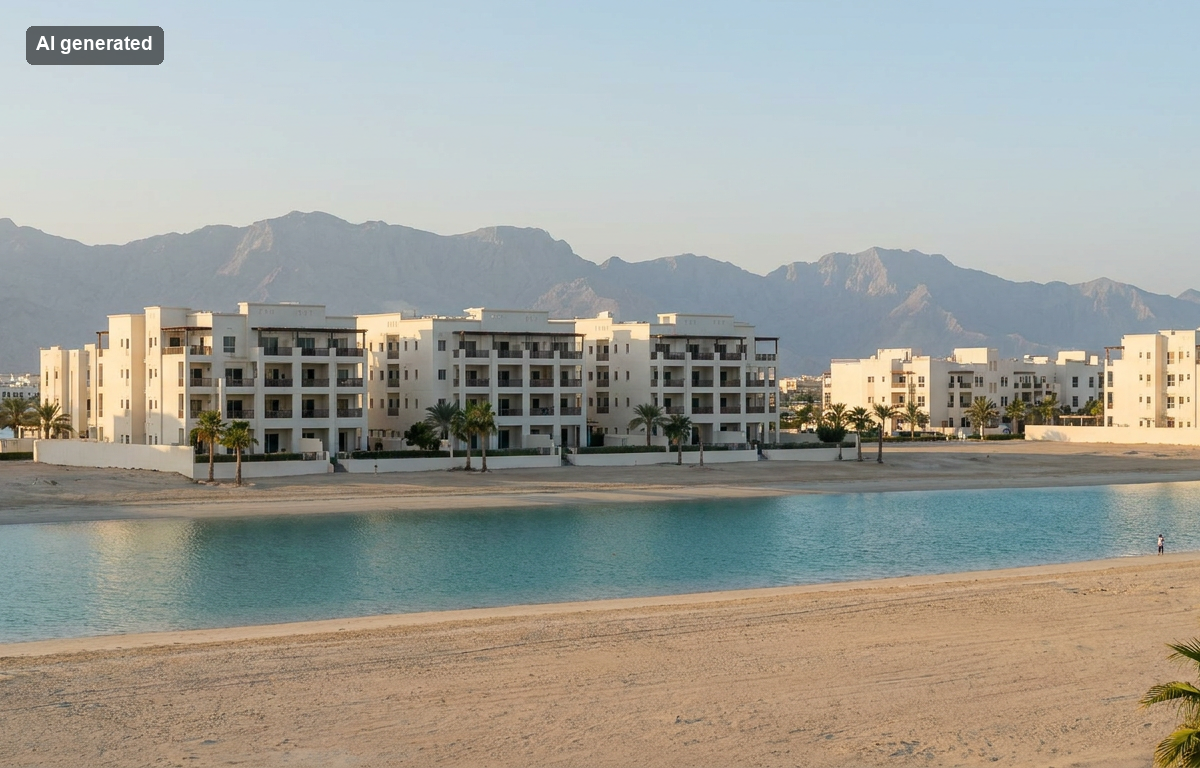
Ras Al Khaimah rental growth 2026 next to a cooling Dubai
CBRE put Dubai’s second quarter at fewer than 37,000 residential transactions, down from more than 51,000 a year earlier, with value falling from about 154 billion dirhams to 88 billion. Matthew Green, Head of Research MENA at CBRE, called it a notable shift and pointed to geopolitical developments beginning to weigh on business activity.
What did not happen matters more. Sale prices are still 1.9 per cent higher than a year ago, as Gulf News set out in its read of the CBRE data. That is the frame for Ras Al Khaimah rental growth 2026 as well: two markets moving apart on rents while neither one is falling apart on price.
JLL reads the same quarter as a 28.6 per cent annual decline and 87.9 billion dirhams, with the secondary market down 41.8 per cent, in figures signed off by Mouhammad Takieddin, Regional Head and CEO MEA. Two research houses arrive at the same reading rather than confirming each other independently, because both are reading the same Dubai Land Department registry.
Why Dubai is a supply story, not a demand collapse
Supply explains most of it. Cavendish Maxwell counted a record 24,800 completed homes in Dubai in the first half of 2026, up 37.6 per cent year on year. Ronan Arthur, Director and Head of Residential Valuations, frames that volume as a sign of a maturing market. Keys in that quantity press on rents first, because rents reprice faster than anything else.
At the front of the pipeline, launches nearly stopped. Savills, whose residential agency is headed by Andrew Cummings, counted 5,335 new launches in the second quarter against more than 45,000 in the first. The same review puts apartment prices at 1,960 dirhams per square foot, 4 per cent below the previous quarter, and Ejari registrations 22 per cent lower quarter on quarter.
And it is not finished. JLL expects a further 28,300 completions in Dubai in the second half of 2026, which means rent pressure there has more runway. Saying that plainly is more useful than optimism. It is also why Ras Al Khaimah rental growth 2026 reads the way it does: the northern emirate has not had its delivery wave yet.
Ras Al Khaimah rental growth 2026: what the Q2 numbers say
The measured picture comes from Cavendish Maxwell, dated 29 July. Villa rents rose 8 per cent year on year, while apartment rents gained 7.1 per cent year on year but slipped 1.4 per cent against the previous quarter, as Khaleej Times reported. Ali Siddiqui, Research Manager, notes a narrowing gap between asking and transacted rents, which he reads as a shift in negotiating dynamics.
Broker figures run higher, and the reason sits in the numbers themselves: Springfield Properties reports asking rents up 14.3 per cent for apartments, 16.1 per cent for villas and 27 per cent for townhouses according to CEO Farooq Syed, and asking rents run ahead of concluded contracts in a rising market. Read side by side, the two sets bracket Ras Al Khaimah rental growth 2026 rather than contradict it.
Demand has been steadier than the headlines suggested. The National reported on 3 August 2026 that property in the emirate held firm through the recent regional tension, and RAKTDA counted more than 670,000 visitors in the first half, with domestic arrivals 47 per cent higher than a year earlier. We unpacked what that means for short stays in our piece on holiday rentals in Ras Al Khaimah.
Ras Al Khaimah rental growth 2026 is a window, not a permanent state
Cavendish Maxwell expects about 25,600 new units in Ras Al Khaimah by 2030, 97 per cent of them apartments, with only around 1,700 landing in 2026. Yousir Habib, Associate Director at the firm, puts the peak year at 2029 with roughly 9,100 units.
So the scarcity behind Ras Al Khaimah rental growth 2026 has a date on it. 2029 is the test year, when the emirate faces the same delivery arithmetic Dubai is working through now. Anyone extending today’s rent curve in a straight line is ignoring a public calendar.
Three variables decide whether the split matters for you:
- Timing: Dubai is absorbing its supply wave now, while Ras Al Khaimah rental growth 2026 sits ahead of a wave that peaks in 2029.
- Asset type: 97 per cent of the northern pipeline is apartments, which leaves villas the scarcer product (Cavendish Maxwell).
- Data basis: asking rents and registered contracts are different things, and the gap widens in a rising market.
What buyers weigh before they act
There is no blanket recommendation here, only a better order of questions. Dubai today means softer rents, firm prices and the widest choice in years. The northern emirate means tight supply and rising rents, with a pipeline that fills up by 2029.
Inside each market, the building decides more than the market. On Al Marjan Island two towers can differ sharply in lettability and resale, and a penthouse on Al Marjan Island answers to different rules than a standard unit inland. That is the practical layer under Ras Al Khaimah rental growth 2026: build quality, service charges and handover dates separate the assets.
We would rather work one case through than sell a forecast. Tell us what you are considering and over what horizon, and you will get an honest reading with the sources attached. If Ras Al Khaimah rental growth 2026 turns out to be the wrong side of this divergence for your plan, we will say so.